Civics/Government
Help your child to become an active citizen by incorporating civics education into your homeschooling plan. Learn about the federal and New Mexico government, how to contact your legislators, how government works, and more.
Activities & Experiments
TeenPact Leadership Schools
TeenPact is a dynamic, hands-on leadership school for Christian students. Their mission is to train youth to understand the political process, value their liberty, defend their Christian faith and engage the culture at a time in their lives when, typically, they do not care about such things. The core program consists of the State Classes offered around the country.
How to Create a Midde School/High School Political Science Club
Tips for creating a political science club.
H.E.A.R.T.S. - Homeschoolers: Educating, Assisting, & Reaching-out Through Service
H.E.A.R.T.S.' goal is to join together a diverse and inclusive group of homeschoolers in community service projects – to increase public awareness, understanding, and acceptance of homeschoolers and homeschooling through combined service, outreach, and public relations efforts.
Teaching Tips & Ideas
H.E.A.R.T.S. - Homeschoolers: Educating, Assisting, & Reaching-out Through Service
H.E.A.R.T.S.' goal is to join together a diverse and inclusive group of homeschoolers in community service projects – to increase public awareness, understanding, and acceptance of homeschoolers and homeschooling through combined service, outreach, and public relations efforts.
TeenPact
TeenPact is a comprehensive leadership experience that challenges students to grow both personally and spiritually. During TeenPact, students meet and interact with other Christian young people and leaders from across their state. The first step in the TeenPact Leadership School is the State Capitol Four-Day Class for ages 13-18. Here students learn about the political process and the basics of state government. The students then move onto a behind the scenes look at how their state government works. Workshops focus on the political process, parliamentary procedure, public speaking, and the bill-to-law legislative process.
Online Resources
House Joint Resolution 05-1040
Recognition of April 8, 2005, as Home Education Day in Colorado.
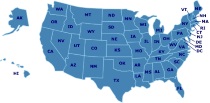
Looking for Another State?
Featured Resources
As an Amazon Associate, we earn from qualifying purchases. We get commissions for purchases made through links on this site.

DMV Test Practice Driving Questions
This book is a selection of 250 questions, answers and rationales in printed form. Questions pertain to national driving standards and are not specific to any single US state. Learn where your knowledge strengths and weaknesses are before you show up to the DMV to take your actual exam.

Basic Montessori: Learning Activities for Under-Fives
For the first time, Basic Montessori opens the celebrated philosophy and method to a more general public. David Gettman has devised a clear and modern explanation of Montessori's revolutionary ideas about early intellectual development, and provides a step-by-step guide to the Montessori learning activities most commonly used with under-fives. These include activities for introducing reading and writing, counting and decimal concepts, science, and geography, as well as activities that help dev...
The Mystery of History
The Mystery of History series is another alternative to traditional textbooks. The five volume set covers history from creation to present day, with a biblical worldview. This series is intended for grades K-8. Note that at this time, this series is not completed.

Homeschooling and Libraries: New Solutions and Opportunities
Homeschools are alwsy looking for alternative ways of schooling that do not necessarily reflect what a typical classroom looks like. Since homeschooling is so diverse across families, information institutions, including public, academic, school, and special libraries may find it challenging to meet all their needs and desires. This collection of essays offers approaches and strategies from library professionals and veteran homeschoolers on how to best serve the needs and experiences of homeschoo...

The Complete Home Learning Source Book : The Essential Resource Guide for Homeschoolers, Parents, and Educators Covering Every Subject from Arithmetic to Zoology
This ambitious reference guide lives up to its name. Practically three inches thick--and we're not talking large print here--it's packed with titles, ordering information, and Web site addresses. From where to send away for a kit to make your own Chilean rain stick to how to order a set of Elizabethan costume paper dolls, the book connects families to a world of learning possibilities. Book titles, short synopses, authors' names, publishers, and years of print make up the bulk of the guide. Clas...